Friday, December 07, 2007

Deutsche Welle Organizes Injo Seminar


Deutsche Welle, the German national world news service is a new partner in the Injo international network. The DW is a large news organisation, broadcasting all over the world in 29 languages. On December 5 the Deutsche Welle organized at their headquarters in Bonn their first seminar on Innovation Journalism, which I had the pleasure to keynote. The program of the seminar is here.

The seminar was opened by Wilfried Ründe, initiator and project leader of the seminar. Wilfried is an experienced German news professional, and in charge of innovation projects at the DW.

Tobias Trosse delivered a very entertaining talk on innovation and how the news relates to it, before I proceeded to explain the injo concept and show some examples from the Injo program.

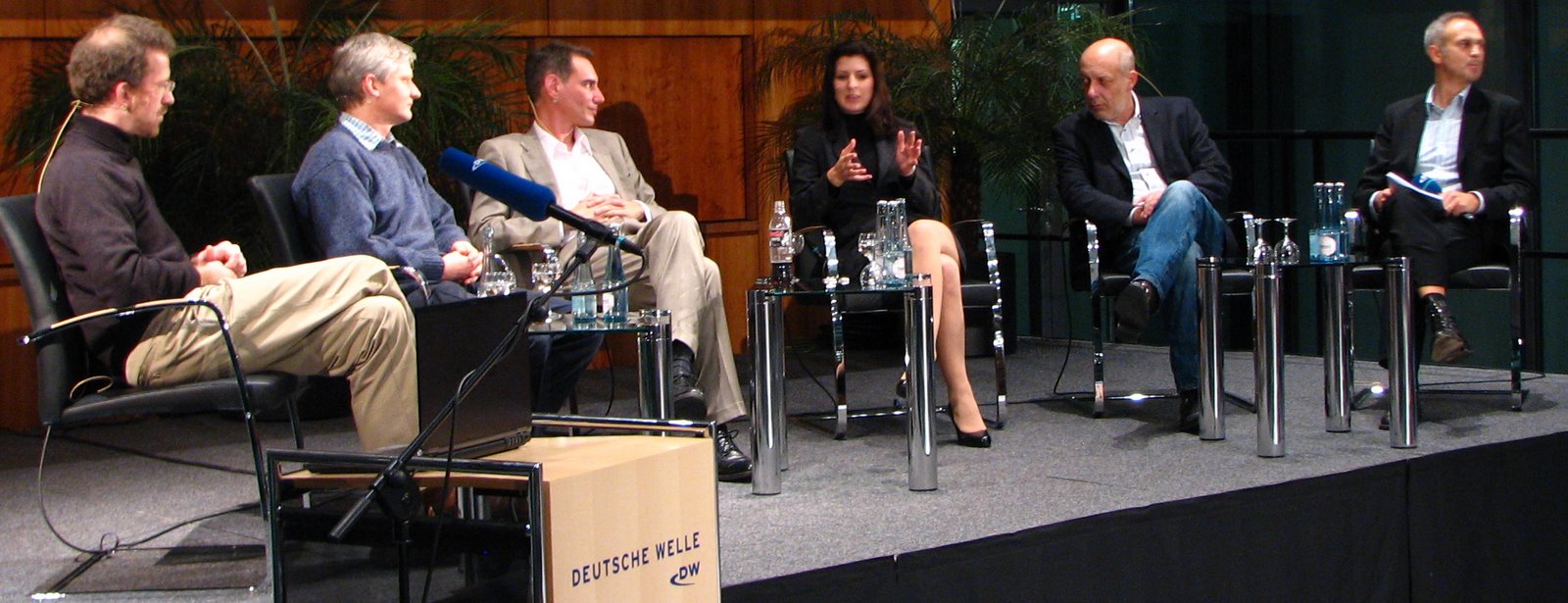
The seminar ended with a very good panel discussion, including Wilfried Rütten - director of the European Journalism Center (another partner in the Injo network), news anchor Heather DeLisle, DW-Akademie development manager Daniel Hirschler, and sports editor Stefan Nestler.

After a very lively discussion, moderator Wilfried Ründe asked the audience of DW-professionals to vote on the value of the Injo concept. It was all thumbs up.

Looking forward to continue working with Deutsche Welle!

Friday, November 30, 2007

Injo in Bilbao


Innovation Journalism was keynoted in Bilbao, Spain, at the seminar "Knitting the Innovation Cluster", organized by Cluster Conocimiento, and Fundacion Telefonica.. The program of the seminar is here: Bilbaoseminar.pdf (original in spanish)

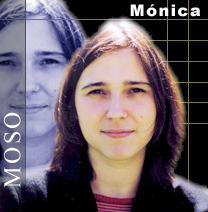
The meeting in Bilbao was spearheaded by Monica Moso, the director of Cluster Conocimiento. Monica is a powerhouse. I am very impressed by her ability to set a target and putting things together to achieve her goals. It will be very good to continue working with the Basque region.

The national Basque public service EITB news channel 24 made an interview with me, available in English, Spanish or French,

Here is their video interview:


And here is a short interview I did with the EITB new media editor Lontzo Sainz Neto:


One of the speakers at the seminar, Spanish innovation & communication strategist and blogger Dioni Nestral, summarized the seminar here (in spanish) (Google translation into english here - translation algorithms are becoming very good). He is a good thinker and commentator.

One can sense a lot of optimism in Bilbao, the capital of the Basque region. Twenty years ago, they had a major economic crisis, and until ten years ago, the river running through the city was dominated by run-down shipyards. Then the Guggenheim museum was built, a fabulous piece of architecture, which set a new tone for the city. In just a few years Bilbao has been transformed into a major architectural attraction, it is very beautiful, and for those who like eating good food, it is a must-visit. Aesthetics are important basics in human life, hopefully the economists will find good ways of including it in competitiveness, if it is not already implicitly there, controlling other measurable factors.

The Basque government has now decided to address innovation. They are naming2008 the "year of innovation" and will be setting up a new innovation agency, which will be reporting directly to the Basque president. It is a good idea to put innovation issues above the ministries, something that very few countries dare to do. Mostly, innovation is assigned to the ministry of industry. The issues is very much the same as for innovation journalism in the traditional newsroom, where innovation often is seen as a topic within "tech" or "business". The Basque government is on the right track.

They Basque region is actually doing pretty well already. They are ranked 55 out of 203 regions in innovation performance by the 2006 European innovation scoreboard.

Tuesday, November 27, 2007

Video: Doug Engelbart at IJ-4

Here is the video recording of Doug Engelbart's keynote at the Fourth Conference on Innovation Journalism.

The title of the talk is "Augmenting the collective IQ of societies." Doug Engelbart is known as the father of the concept of the personal computer, and inventor of the computer mouse. He is a proponent of the development and use of computers and networks to build collective intelligence that can solve the world's problems.

The introduction of Doug is made by John Markoff, legendary Silicon Valley journalist.


Doug's vision fits well together with the concept of innovation journalism. Doug addresses this in his talk, noting that innovation journalism can be the "perceptory system" of the collective intelligence.

(many thanks to Jeff Schwartz for providing access to the documentation)

Thursday, November 22, 2007

Injo Comes to Oxford


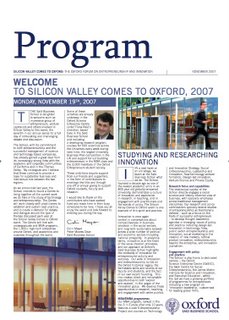
Innovation journalism was featured on Nov 19 at the yearly "Silicon Valley Comes to Oxford" event at the Saïd Business School, Oxford University. Thanks to Marc Ventresca and Fiona Reid of the Entrepreneurship and Science program at Saïd, I was one of the invited speakers this year to speak at the SVCO. I am very much looking forward to continued collaboration with them. Present on the Injo-panel was also Turo Uskali from the University of Jyväskylä, another core member of the Injo initiative, presently a visiting scholar with Marc and Fiona, and the ur-innovation journalist Mike Malone, who is the father of "Silicon Valley Comes to Oxford", running on its seventh year.

The program of SVCO 2007 is here:
SVCO%202007%20program.pdf

Monday, November 12, 2007

Sweden funds Three Years of Injo - $1.8M


Up to eighteen Swedish innovation journalism fellows will be participating in the program at Stanford in the coming three years.

VINNOVA, the Swedish National Agency for Innovation Systems - the incubator/seed investor of the innovation journalism initiative - will be funding the innovation journalism program with 12 million Swedish crowns, or about $1.8 million. .

The Swedish innovation journalism initiative went this year from pilot stage to a permanent initiative. The Swedish program has been expanded, and divided into two parts, an International part and a Swedish part.

The International part includes the engagement in the Innovation Journalism Program at Stanford, international collaboration, and developing the concept of journalism. The director is David Nordfors (yes, that's me) at Stanford.

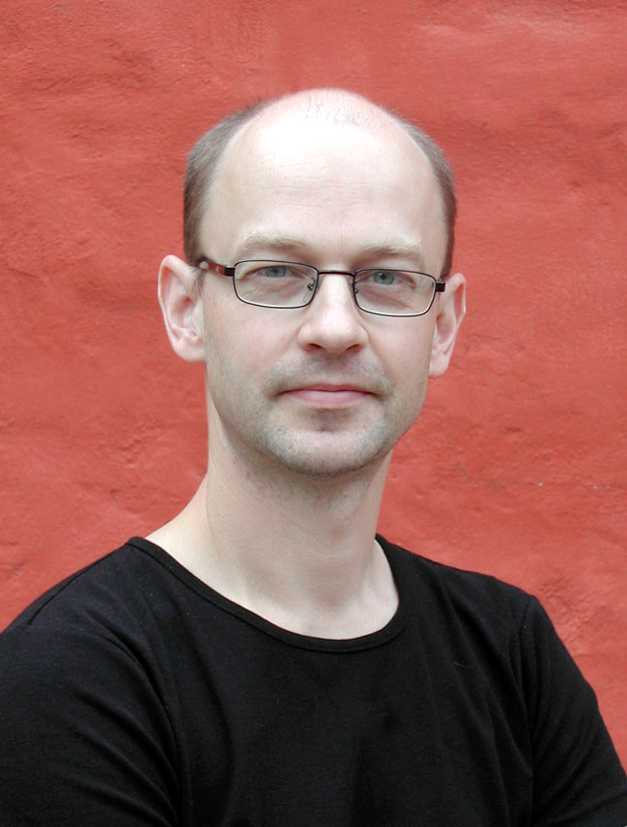
The Swedish program nominates Swedish fellows to the Innovation Journalism Program at Stanford and is in charge of activities within Sweden. The director is Jan Sandred at VINNOVA. Jan is an experienced news media professional, he is the founder of Biotech Sweden and other publications. He was an Innovation Journalism Fellow in the first round of the program in 2004.

These parts form together the Swedish Innovation journalism initiative. Jan and I are working closely together.

The Swedish program has hosted 23 Swedish innovation journalism fellows since 2004, and is beginning to show a good footprint in Swedish journalism circles.

The call for candidates to the Swedish Innovation Journalism Fellowships 2007 is still open - it closes on Nov 22. Go here if you are interested in being a Swedish Injo Fellow. There is a blog post about the call here.

Looking forward to the coming years!

Saturday, November 10, 2007

Pakistan Broadcast Code of Conduct - Restrictions Imposed

Here is a scanned copy of the amendment of the Pakistan broadcasting ordinance introducing severe restrictions in what may be broadcast on electronic media (mainly TV and radio). The standard wording in the introduction of the ordinance looks very odd in context - "The president is pleased to make and promulgate the following Ordinance". Hopefully, Pakistan will increase the freedom for journalists soon.
PAKISTAN%20pressordinance%20.pdf

Wednesday, October 31, 2007

First Injo Presentation in Turkey


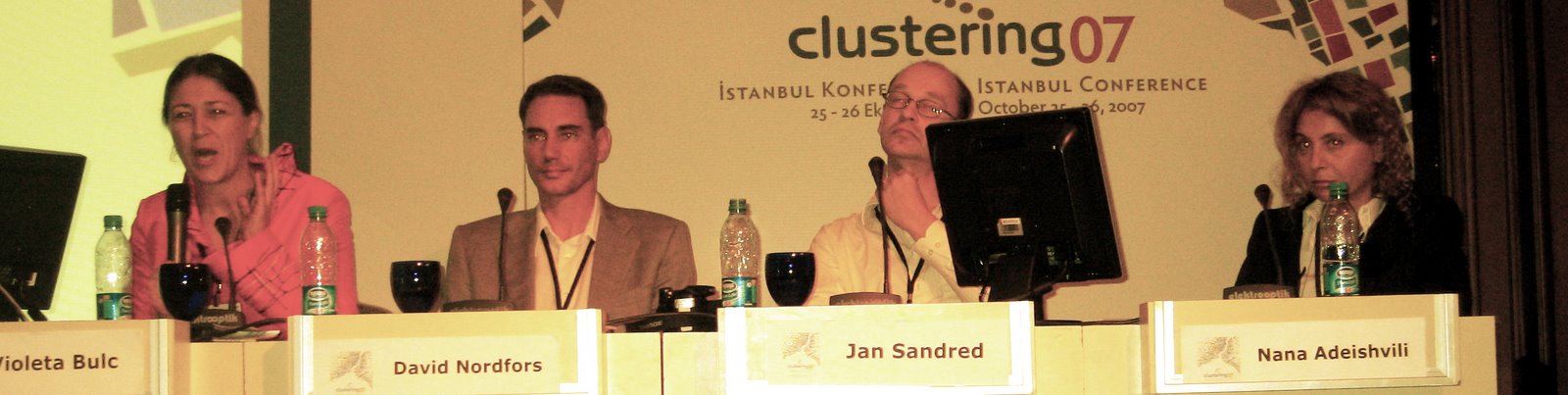
“Creating Innovative Environment” Workshop “Clustering 07”
Moderator:
Violeta Bulc, Vibacom, M.Sc.
Guests:
Jan Sandred, M.Sc., VINNOVA
David Nordfors, Ph.D., Stanford University
Nana Adeishvili, Ph.D., Anteja ECG

Innovation Journalism was presented for the first time in Turkey a few days ago, on Oct 25 in Istanbul at the Clustering 2007 conference.

The presentation was in the "Creating Innovative Environment" session, organized by Violeta Bulc, the Ljubljanian entrepreneur who is spearheading the Injo initiative in Slovenia. Read Violeta's summary of the entire session here.

The interest in the session was very high, there were a large amount of people listening.


Clustering and Competitiveness are well established concepts and there are a lot of initiatives around the world. Innovation Journalism fits very well into this framework. If a society is developing an innovative business cluster, independent journalism is the key for integrating it into society, and connecting the development of the cluster to societal awareness and opinions. (More about this in "The Role of Journalism in Innovation Systems")

Monday, October 29, 2007

Swedish Injo Fellowships Call for Applicants 2008: Six Fellows, 375 000 USD

The Injo Program in Sweden will be sending six Swedish Injo Fellows to the International Innovation Journalism Program at Stanford 2008.

The call for applicants is open until Nov 22.


VINNOVA, the Swedish Governmental Agency for Innovation Systems is providing funding for six fellows, up to a total of 2.400.000 SEK (375.000 USD) for 2008. These funds are intended to cover costs of the Fellows' Swedish employers during their participation in the Stanford program, i.e. coverage of salary expenses, travel, living costs in the US etc. VINNOVA uses the same terms for coverage as goes for civil servants (no other reason for this than that it was the most accessible set of regulations to ensure fair coverage).

The fellowship program at Stanford 2008 is five to six months long, and has the following activities:
  • InnovationBeat Newsroom. A four week training newsroom for all fellows, a learning-by-doing approach on reporting on the Silicon Valley. Coaches: G. Pascal Zachary, and John Markoff
  • Working with hosting newsrooms. Fellows spend 4-5 month inside a leading US newsroom. Each fellow is assigned by the newsroom to cover innovation issues. (Summaries of stories published by fellows 2007 is available on http://www.innovationjournalism.org/doer )
  • IJ-5, The Fifth Conference on Innovation Journalism, May 21-23. Each Fellow is in charge of one session at the conference, which they dedicate to an important aspect of innovation journalism of their choice. (The program of IJ-4 2007 is available here)
  • Field trip to the US East Coast. Looking at how innovation policy is made in Washington DC, and how the markets for listed companies work in New York.
Here is a video by Tina Bjers, Reporter at Swedish TT and Injo Fellow 2007, telling about what she got out of the program this year:


The VINNOVA call text includes the following program statement in English (the rest of the call is in Swedish):

The innovation journalism program was started in 2003 to offer an opportunity for individual journalists, to increase their knowledge and develop skills and practices, and increase professional level in covering innovation processes.

It is designed as a fellowship program, where journalists practice at editorial offices in regions with efficient innovation systems, like Silicon Valley, Boston and New York. In addition the participants are required to participate in workshops, study visits and the annual innovation journalism conference at Stanford University, organized by Stanford and VINNOVA. The fellows are also part of a Swedish alumni community and offered to be part of an international
alumni community.

The target group is senior practicing journalists and editors.

The aim is
  • To get experience in covering innovation systems, innovation processes and entrepreneurship. Innovation is a process, often long-term. Understanding of how to evaluate the progress of companies and societies by looking at the interaction between science, R&D, business development and public policy.
  • Get a systems perspective. Understanding of who depends on who, and how? Innovations do not occur – they are created in cooperation with many. And you need support from many actors to create innovations.
  • Understand and develop skills and practices in cross disciplinary work. You need to cover many difference aspects: science, law, finance, policy, even the social and ethical. A combination of business, technology, political and cultural journalism.
Here is a complete list of previous Injo Fellows. If you are interested in applying for an Injo fellowship, it is a very good idea to chat with any of these people, they will be able to give you important tips and advice:

  • Jyrki Alkio, Journalist, Helsingin Sanomat, Finland, 2006
  • Marie Alpman, Innovation Editor, Ny Teknik, Sweden, 2007
  • Erik Amcoff, Journalist, Affärsvärlden,Sweden, 2006
  • Patrick Baltatzis, Journalist, Entreprenör, Sweden, 2006
  • Eva Barkeman, Science Editor, Aftonbladet, Sweden, 2006
  • Tina Magnergård-Bjers, Reporter, TT, Sweden, 2007
  • Johan Boström, News Desk Editor, Göteborgsposten, Sweden, 2005
  • AndreasCervenka, News andFeature Editor, Affärsvärlden, Sweden, 2005
  • Adam Edström, Editor-in-Chief, Elektroniktidningen, Sweden, 2004
  • SaidaFazal, ResidentEditor, Business Recorder, Pakistan, 2007
  • Birgitta Forsberg, Journalist,Veckans Affärer, Sweden, 2005
  • Thomas Frostberg, Editor-in-Chief, Rapidus, Sweden, 2006
  • AndersFrick, FreelanceWriter representing Ny Teknik, Sweden, 2007
  • Marie Granmar, Editor-in-Chief, Process Nordic, Scandinavia, 2005
  • Patric Hadenius, Editor, Forskning & Framsteg, Sweden, 2004
  • Zamir Haider, Senior Reporter/Producer/Anchor, AAJ TV, Pakistan, 2007
  • Ralph Hermansson, Journalist, Riksdag & Departement, Sweden, 2007
  • Magnus Höij, Feature Editor, Computer Sweden, 2004
  • Erika Ingvald, Journalist,Elektroniktidningen, Sweden, 2006
  • Niklas Johansson, Journalist,Veckans Affärer, Sweden, 2005
  • Johan Jörgensen, Journalist,Affärsvärlden, Sweden, 2004
  • AndersLotsson,Journalist, Computer Sweden, 2005
  • Marcus Lillkvist, Reporter,Västerbottens-Kuriren, Sweden, 2004
  • Ilkka Luukkonen, Journalist,Maaseudun Tulevaisuus, Finland 2007
  • Miriam Olsson, Journalist,Goteborgsposten, Sweden 2007
  • JanSandred, FounderBiotechSweden, Sweden, 2004
  • Amanda Termén, Journalist,Göteborgstidningen, Sweden, 2006

Tuesday, October 16, 2007

Session at Clusters 2007 - Global TCI Conference

The TCI Global Competitiveness Conference 2007 - this year hosted by Portland, Oregon, USA - featured a session on the Innovation Communication System, chaired by me.

The session introduced the novel concept of the Innovation Communication System (see original blog posts explaining this concept here and here) for the second time to the business cluster community. The first time was at the TCI Global Conference 2006, in Lyon, France.

Clustering is moving in the direction of regional innovation systems, so the concept should be extremely relevant. This assumption was confirmed by very positive reviews from the audience.

Here is how the session was presented in the conference program:
Clusters and innovation ecosystems are attention economies. There are a lot of ideas, but attention is scarce. Media and communicators are "attention workers," generating and trading public attention. They are key players in the "innovation communication system," a new central concept in clustering and competitiveness.
The panel represented various parties in the innovation communication system:

Tuesday, October 02, 2007

Cal State University puts Injo on curriculum

Here is some exciting news from Raul Reis, Associate Professor & Acting Chair of the Journalism Department at California State University, Long Beach. He has put Innovation Journalism on the curriculum for this autumn. Raul is a pioneer, this is the first time Injo is offered to undergraduates at a US University.

For more info, get in touch with Raul directly.

Raul's story about the Injo course in his own words:

The Department of Journalism at California State University, Long Beach, is offering for the first time this fall a course on Innovation Journalism. I had the idea to create and teach the course during the Fourth InJo conference at Stanford last May. To be honest, I didn’t know much about InJo before I attended the conference. I had heard the term before, but didn’t quite grasp what made the concept different from good, old-fashioned, news coverage of technology. I have to say that IJ-4 changed my perspective on InJo, and broadened my horizons on the topic. The most striking thing about InJo for me is its ability to approach innovation in a more holistic way, looking at how different aspects of the innovative spectrum overlap and complement each other. As a result, instead of looking at the latest gadgets or software programs as isolated end products, this wider approach to innovation tries to look at them in a more comprehensive way, examining each step that took to get to a particular technological advance; the impact that new technologies or products might have on society and the market; the political, social or environmental forces that might be at play; and even the overall benefits that might be accrued from this particular development. Moreover, InJo forces journalists and students to think outside the box, and cover not only technological developments, but also innovation in areas such as science and the environment, new social trends, creative government and public policy, and the business world, just to list the mot obvious ones. Since most of my students are advanced undergraduate journalism majors, many of them seniors, I wanted the course to be hands-on—instead of talking about InJo’s definitions, for example, I want them to be InJo reporters and editors. For this reason, the course is organized as a hands-on workshop, where students, working in pairs, produce multimedia packages that cover innovative developments, trends, products, and ideas. Those multimedia packages have to blend platforms and media, including video, photography, hypertext, graphics, and audio. The motto for the course is: “Instead of talking about innovation, show us innovation.” The students and I are also producing a web site, where all stories and packages will be posted, and a collective blog, an ongoing conversation about some of the issues and topics we discuss in class. Whenever needed, we take class time to work on different programs and software, to try to bring everyone to a similar technical level. Students have responded really well to this last point, with savvier students making themselves available as a resource for more tech-shy classmates. The department and faculty have been very supportive of this InJo initiative, because all of us understand the importance of media and technological convergence, and we want to prepare our students to face a marketplace that expects them to hit the ground running. I’m especially excited about this new field, and hopeful that this special course will be successful and translate into a permanent teaching and research area for us.

Course blog: http://innovationjournalists.blogspot.com/
Course web site: coming soon

Monday, September 24, 2007

Five Year Funding of Finnish Injo Fellowships


The Innovation Journalism Program at Stanford University will get more Finnish fellows for next five years. Helsingin Sanomat Foundation and Sitra, the Finnish Innovation Fund, have agreed to pay the necessary fees, travel expenses and living costs for three Finnish Innovation journalism fellows per year for six months, starting February 2008. The total sum of money invested for five years is approximately 700.000 euros.

The announcement was made in Helsinki on Sep 20 by the President of the Helsingin Sanomat Foundation Heleena Savela (on the photo).

The five-year funding by the leading Finnish private media foundation and the government innovation foundation is another milestone for the growing recognition of the concept of innovation journalism and the program at Stanford. The success follows the work of Seppo Sisättö and Turo Uskali in spearheading innovation journalism in Finland.

The Finnish Injo-grants are aimed at professional journalists, who have worked at least five years. Journalists can apply the first three fellowships from the Foundation until 31 October 2007.

According to Foundation, by the end of September 2007, the Helsingin Sanomat Foundation has awarded grants in the amount of 3,329,470 euros. In all, 31 projects and undertakings are given support. The Foundation will further provide some one million euros in grant money this year.

Links:
http://www.hssaatio.fi/en/grants_announcements.html
http://www.hssaatio.fi/apurahat_ajankohtaista.html (in Finnish)
http://www.sitra.fi/en/About+Sitra/sitra.htm (Sitra)

Sunday, September 23, 2007

Strategic Innovators (India) runs Innovation Communication Systems essay


The essay "PR and the Innovation Communication System" by Nordfors, is republished by "Strategic Innovators" ( July - Sept 2007, Volume I | Issue 3), a quarterly Indian refereed journal on contemporary strategic management trends. The essay is also available on Innovation Journalism (INJO-3-5).

The essay printed in "Strategic Innovators" is available here in pdf:
strategic%20innovators%20nordfors.pdf

"Strategic Innovators" is published by The IIPM Think Tank, an independent, India-centric research body, is inspired by Dr. M.K. Chaudhuri's vision of India as an economic powerhouse in the 21st century. The IIPM Think Tank is committed to enhance public awareness of policy issues an economics and management and to engineer solutions that will fulfill the 'Great India Dream'. By publishing the finding of its research, and though the active participation of its senior researchers in the media and policy, it aims to bring new knowledge to the attention of policy makers.