Thursday, October 16, 2008

Mexico Interested in Injo Initiative


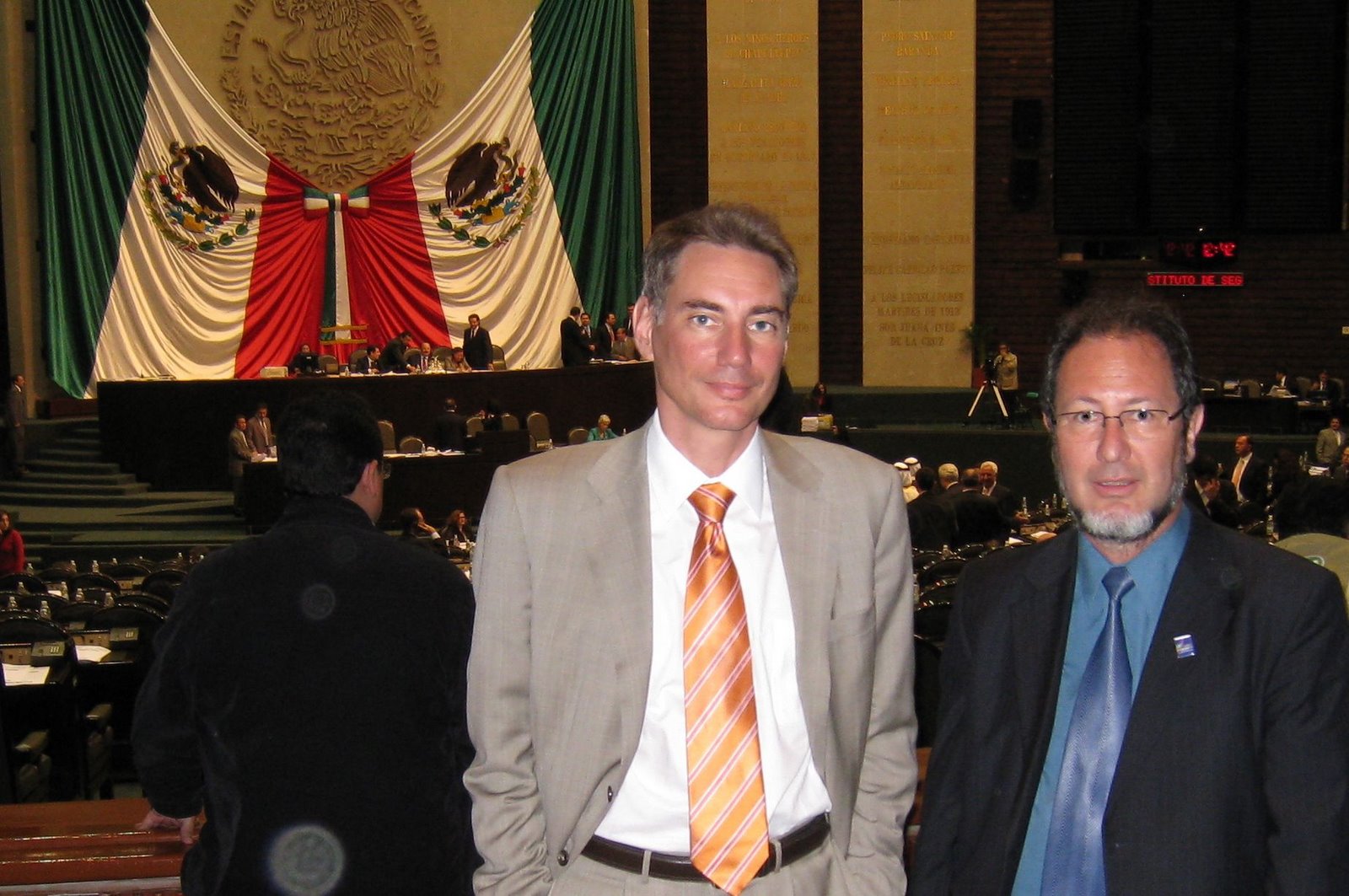
I have had a three day tour in Mexico, with fifteen conferences and meetings on Innovation Journalism, all inspiring. The meetings crossed the 'triple helix', involving news organisations, universities, industries and government.

I gave a keynote in the parliament, the Congreso de la Union, for journalists, PR-people and politicians. It was hosted by Jesus Vicente Flores Morfin, member of parliament and secretary of the Commission of Science and Technology. He also participated in the panel discussion after my talk. You can read the coverage of the event here (html) (pdf) in Spanish and here in Google-translated English).

I also keynoted a journalism conference at the Tecnologico de Monterrey university campus in Mexico City. Coverage here (html) & here (pdf) in Spanish and here in Google-English.

The man who brought the idea of Injo to Mexico is Jorge Zavala, Mexican entrepreneur and founder of the Mexican TechBA accelerator in Silicon Valley, which is connected to FUMEC - the United States-Mexico Foundation for Science. Jorge pretty much grew up in a newsroom. His father was a well known journalist, who often brought his boy along to work. People like Jorge, who work with entrepreneurship and public innovation policy, and also have strong personal ties to journalism culture, often immediately grasp the concept of innovation journalism and the potential for it in the innovation economy.

Jorge and Fumec brought a sizeable Mexican delegation of journalists and funders to IJ-5 at Stanford in May, and they now followed up by arranging this visit with funding from Conacyt - the Mexican National Council of Science and Technology.

FUMEC is headed by CEO Guillermo Fernandez and chairman Leopoldo Rodriguez. The visit program was put together by Madai Quiroz Uria. Together with Jorge they form an entrepreneurial team, bridging Mexico and Silicon Valley, who want to drive an innovation journalism initiative.

Mexico is very well positioned for it. There are well connected people in journalism, universities, industry and government who get the Injo concept, that the Fumec/TechBA team can include or leverage on.

A Mexican Injo initiative has a great potential for both Mexico and Silicon Valley. Here in Silicon Valley there is a large Mexican population, but most of them are not in the innovation ecosystem. There is cultural separation between the Hispanic workers and the hightech workers in the Valley which is not constructive. If high quality Mexican journalists will be Injo Fellows working with Silicon Valley newsrooms, it will create networks between journalists in both countries enabling them to bridge subconcious cultural divides, and connect the dots between Mexico and Silicon Valley in the innovation economy. Given the large constituency of Mexicans in the Valley, this can be huge.

Monday, October 06, 2008

InJo Fellowships 2009


A more detailed description of the InJo Fellowship Program 2009 is available here.

We are planning the sixth round of the Innovation Journalism Fellowship Program at Stanford, starting Feb 2 2009. Innovation journalism fellows will go through an orientation at Stanford before beginning their work off campus with hosting US newsrooms. Potential hosts this year: AlwaysOn-Network, Bloomberg, CBS CNET News.com, Fortune Magazine (New York), GreenTechMedia, San Francisco Chronicle, Seed Magazine, Technologizer, Time Magazine (New York) and VentureBeat

Fellows based in Silicon Valley will meet regularly at Stanford for lectures and discussions. Past lecturers have included among others Doug Engelbart, inventor of the mouse and Vint Cerf, father of the Internet, Dan Maydan, who built up Applied Materials, and Curtis Carlson, President of SRI International. All Fellows will take active part in arranging IJ-6, the Sixth Conference on Innovation Journalism, which will take place May 18-20 2009 at Stanford. Fellows will also participate in two seminars held together with The World Economic Forum Media & Entertainment Industry Partnership and the US National Academies.

So far, four countries are participating in nominating fellows to the program: Sweden, Finland, Pakistan and Slovenia. If you are a journalist/editor who wants to apply for a fellowship, please check with your national contact (check the program description).

The call for the Swedish program is here - the call closes on November 3; the call for Pakistan is here; The Finnish call closes on Oct 17 - contact Turo Uskali for more information (Tel: +358-40-534-0249).

The Innovation Journalism Fellowship Program is funded by VINNOVA, Competitiveness Support Fund, Helsingin Sanomat Foundation, SITRA and the Scholarship Agency of Slovenia.

To set up a program for nominating fellows or to start any type of innovation-journalism program, contact me. Note that the program at Stanford does not fund other programs. External funding must be arranged before nominating fellows.

Friday, September 26, 2008

The Speed of New Words as an Innovation Indicator


I recently had the great pleasure of being one of the World Economic Forum "Innovation 100" who convened here at Stanford in order to discuss the reasons behind innovative clusters. I will tell you more about the details when the WEF releases its report.

The World Economic Forum Innovation 100 summit is a part of their work on producing an 'Innovation Heatmap' of the world. People have ideas all over the world, but where are the places they are being successful, and what is it with these places that makes it happen just there? Finding the places is not so tricky, once they are successful in innovating - like Silicon Valley. But it is very difficult to nail down a good set of indicators that are useful for benchmarking innovation hot spots, offer a clue of why innovation is going well or not, and that can predict which are the coming hot spots.

So far, the number of registered patents is considered as one of the most important indicators, but it is far from the whole story. Patents can be key in some sectors, like pharma industry, but in other innovation fields like software and services, patents are much less relevant. A few years ago I edited a book that looks at intellectual property issues in the context of commercialization of academic research. It is a complex issue.

There are today lists that rank innovative regions. The European Innovation Scoreboard is one of them. The rankings usually use indicators like those provided in the US Science and Engineering indicators from NSF, or the EU Science and Technology Indicators from Cordis. These indicators are good for assessing things like educational level of workforce, number of registered patents or published research papers - the types of numbers that are possible to measure in surveys or by scanning public registers. They usually miss out on one crucial issue for innovation: mobility. Mobility can be between various professional domains: innovation is not driven by science OR technology OR business OR politics, but by the interaction between them. Mobility is also geographical: Silicon Valley hosts people from all over the world. Even though it seems doable to trace the mobility of people, it is a controversial thing to do - people have the right to privacy. It is also difficult to quantify in an easy way (its much easier with number of patents or math test ratings)

Innovation is often about new combinations of existing concepts, or re-framing something in a new context. In the seventies, very few thought of computers having anything to do with storing pictures, even less music. Bringing artists into the world of computers and vice versa was probably more important for innovation than doubling the number of excellent Cobol programmers (the biggest programming language of that day). At the same time, many innovation scoreboards will care more for programmers than artists, and not think of addressing the communication between them. The people running such scoreboards may have some valid concerns about how to address such issues: how does any measurable quantity relating to artists relate to innovation? Does the number of art galleries scale with innovation? How? How can the innovative interaction between artists and programmers be measured?

I have a hunch that innovation hot spots are more likely to be places with low thresholds between people doing different things, where people easily get to know each other, and where they can easily interact in making novelties happen. I imagine they are places with a high concentration of people that find few things as important as the next big thing, who want to be a part of it, and who like chatting about it with anybody who is interested, regardless of profession or background. In Silicon Valley, it happens that people start companies with people they met at their children's birthday parties.

All this requires one thing: This diversity of people in the innovation ecosystem need to share a language that allows them to chat about the stuff that interests them. Otherwise they will have a tough time sharing interests and adding their own parts to it in a way that other people will understand. Innovation is about the introduction of novelties, which often come with new words and narratives, so I guess I am suggesting that innovation hotspots are more likely to be places where people in the innovation ecosystem can rapidly develop new shared language.


Since a few years back, there are tools on the Internet that can measure the development of language. Google Trends is one entertaining example, it 'charts how often a particular search term is entered relative the total search volume across various regions of the world, and in various languages' (Wikipedia). I think future key innovation indicators can be found through sources like Google or Facebook, finding the hotspots on the geographical world map, as well as the social map, where new language is growing the fastest, also analyzing how the new language connects to market value, weighing these things together.

Today, not many of the people dealing with how we innovate give much conscious thought of how we generate the shared language that is needed for any process of innovation or successful outcome thereof. Sociolinguistics and studies of innovation can be a great pair!

Here are some arguments, linking the thought about language as an innovation indicator back to earlier thoughts posted on this blog:

The formation of new shared language is always a part of innovation.

A concept requires the following language components in order to be shared by people:
  1. A Name - so that it can be referred to
  2. A Definition - so that it can be identified
  3. A Narrative - so that it can be related to and put into context; a narrative is needed to relate a concept to the surroundings and lives of people, to cultures, or to other concepts
Innovation is "the process of creating and introducing new customer value to the market" (as defined by C. Carlson and W. Wilmot). This makes it always into interaction between many people, requiring new language.
  1. Innovation is the creation and introduction of new customer value to the market
  2. In order to introduce something, it needs to be communicated
  3. Communication requires shared language
  4. New concepts need new names, definitions and narratives to be a part of the language
  5. The new names and definitions need to be called to peoples attention so that the new things can be discussed and introduced in our language.
  6. People's attention will influenced by attention workers - professionals who generate and broker peoples attention, such as journalism, PR, marketing or lobbying - who have a stake in innovation. They typically take part in the innovation value chain by acting either in the interest of the sources of new language (PR, Marketing, Lobbying) or in the interest of the audience for new language (journalism). The attention workers of different sorts interact with each other, forming an ecosystem which will be facilitating the formation and introduction of new shared language. It may be referred to as the innovation communication system.

As I said above, innovation is not about science OR technology OR business OR politics, etc. - it is about the connection between them! All involved professional fields have their own language. The concept of 'attention workers' and the 'innovation communication system' introduces incentives and mechanisms for creating shared language between different sectors and professions who come in touch with each other through innovation.

I believe our ability to generate new shared language is one of the bottlenecks for innovation. It is especially challenging to 'bridge verticals'. People in different professions can be talking about the same things without understanding each other, because they have different language for it. Sometimes different specialists don't have words for what other specialists are doing: Most politicians don't understand radioengineering and most radioengineers don't understand political science. Bridging them is an opportunity for attention workers, the key professional group from the societal point of view are the journalists - the attention workers who act in the interest of the readership (PR are attention workers who act in the interest of the sources - they are both needed in the bigger game).

Sunday, September 14, 2008

The Intrapreneur's Dilemma


I was the other day at the World Economic Forum Media and Entertainment industry network meeting in New York. It was a really valuable meeting with lots of very enlightening discussions on the future of the media industry in these innovative times.

Here is a thought that is relevant for the present challenge of the media industry. It is generally valid, not only for the media industry, and applies to all people and traditional organisations who are seeking to innovate. Let's call it 'The Intrepreneur's Dilemma'. An 'intrapreneur' is an entrepreneur within an organization. Here goes:

When someone tries to innovate within a traditional organization,
few will understand what he/she is doing,
but everybody will understand who is a trouble-maker.


After the innovation has been embraced by the organization,
few will remember who started it,
but everybody will remember who was a trouble-maker.

This is the dilemma encountered by many intrapreneurs -
they risk punishment for success.

Organizations that want to be innovative need to find solutions to the intrapreneur's dilemma and its consequences, if they don't wish to set negative examples that will scare off people from intrapreneurship. Here is an example: as long as a new project is of little impact and not well understood, the intrapreneur will be fighting for its continuation while others may ignore its existence or perhaps wonder why it should be allowed to steal attention from the more important core activities. Once a project has impact and receives recognition, incumbents within the organization will want to influence or control it. People may reason that 'a project as important as this one should not be run by a trouble-maker'. This situation requires a constructive interaction between a skilled intrapreneur and an enlightened organizational leadership. A good innovation system within the organization may help provide solutions, but I don't think it can replace individual savvy and diplomatic skills.

If anybody who reads this has a good story to illustrate the 'intrapreneur's dilemma', or knows of descriptions of similar phenomena under different names, send me an email or leave comments and links here below.

Friday, September 05, 2008

The World Economic Forum Innovation 100 Summit

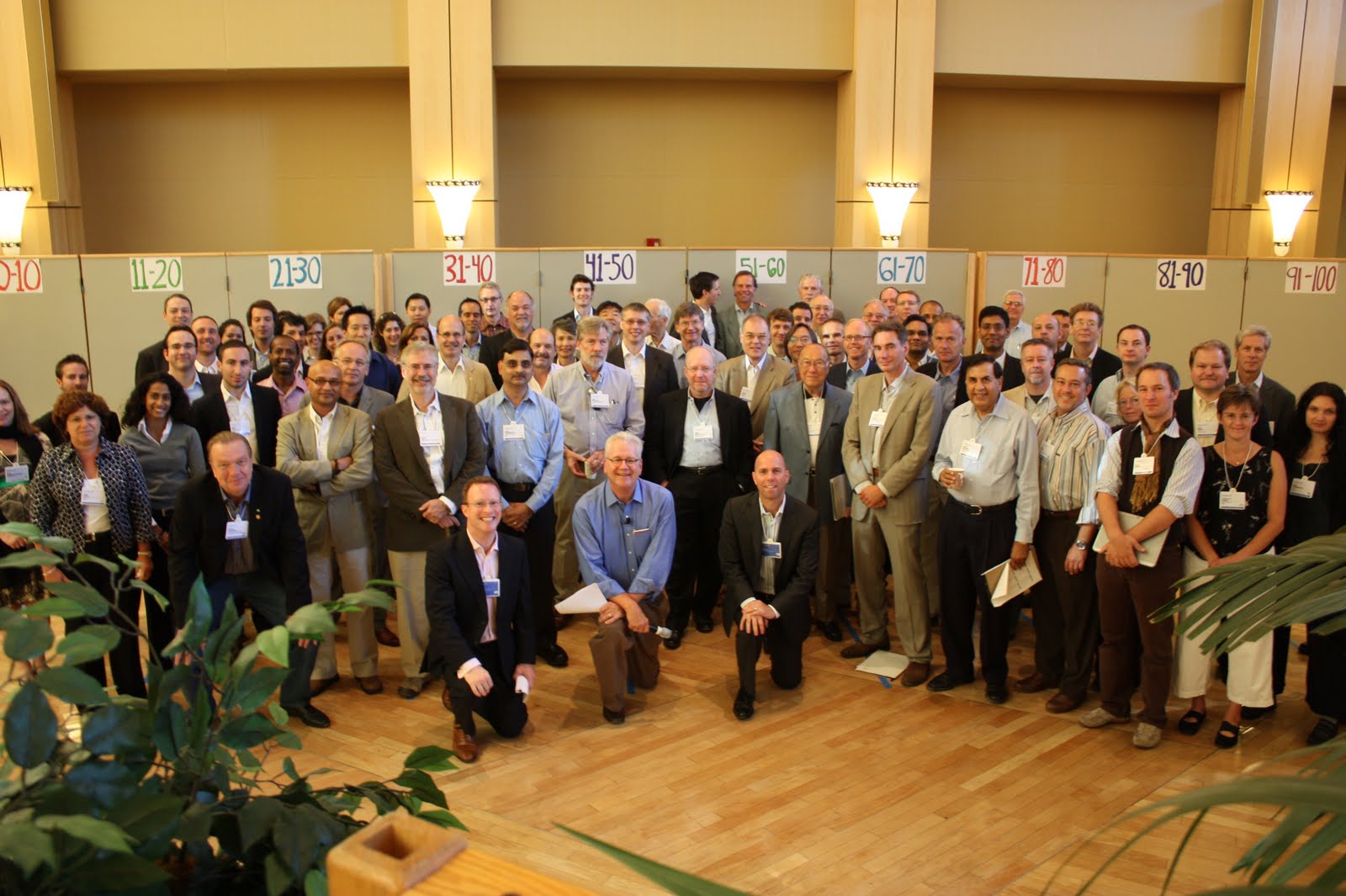
I had the pleasure of being one of the hundred at the The World Economic Forum "Innovation 100 Summit" on Sep 3-4. The WEF is a leader in spotting global economic trends, and publishes yearly the Competitiveness Index at the meeting in Davos. They are now looking at innovation, the Innovation 100 is the start of a major effort to penetrate the topic thoroughly. The WEF is interested in the role of journalism in the innovation economy, which was a reason for them to invite me.

Here is a picture of "the Innovation 100":
Here is the World Economic Forum description of the event:
While most agree that culture and people are the most important drivers of innovation, business leaders are finding it hard to understand how to respond with new management and operational models. The World Economic Forum is partnering with Harvard Business Review, McKinsey & Co, SAS, and Thomson Financial to synthesise the most relevant data available globally to create the most complete factual basis for discussions on technology innovation. This meeting - aimed at the top 100 thought leaders - is one part of many dialogues occuring, to help set the tone of the global discussion on innovation. The objective was to explore this topic from a global, regional and corporate level, with two clear areas of focus: Culture of Innovation and Location of Innovation.
- Innovation 100 - Photos

Tuesday, September 02, 2008

Finnish Innovation Journalism Research Gets 900.000 Euro


Injo as a theme for academic research has taken a big step.

Finnish Funding Agency for Technology and Innovation (Tekes) has awarded a big research grant (almost 900 000 euro) to a Finnish research consortium in order to execute research on global innovation journalism 2008–2010. The research consortium will cooperate with my innovation journalism program at Stanford.

The Finnish consortium consist Department of Mass Communication/University of Tampere, Department of Communication/University of Jyväskylä, and Futures Research Centre/Turku School of Economics. All aforementioned institutions have already done research on innovation journalism for several years, but mainly in national, Finnish context.

The main aim of the new research project (acronym as Ginjo) is to enlarge and deeper the knowledge of global innovation journalism, and also develop new working methods and tools for news media. Case studies will concentrate on topics such as “green tech” and eldercare
innovations.

All together different Finnish funders, Tekes, Helsingin Sanomat Foundation, and Sitra, have already agreed to invest 1,6 million euro for innovation journalism research and education until year 2012.

According to Tekes it invested 329 million euro in R&D projects and innovation activities by companies, universities, institutes of higher education and research institutes during January–June 2008.

For more information, please contact Dr. Turo Uskali.

Tekes: http://www.tekes.fi/eng/

Department of Mass Communication/University of Tampere
http://www.uta.fi/jour/index1.html

Department of Communication/University of Jyväskylä
http://www.jyu.fi/hum/laitokset/viesti/en/

Futures Research Center/Turku School of Economics
http://www.tse.fi/EN/units/specialunits/ffrc/Pages/default.aspx

Saturday, July 26, 2008

Injo Program Presented at IAMCR Conference


The first five years of the Innovation Journalism Program were summarized at the IAMCR conference in Stockholm "Media and Global Divides". IAMCR is the worldwide professional organisation in the field of media and communication research. The conference this year hosted 950 researchers from 85 countries.

The Injo paper was written by Turo Uskali, running the Finnish innovation journalism research program, Jan Sandred, who runs the Swedish innovation journalism program, and me (David Nordfors, running the Innovation journalism program at Stanford).

The paper summarizes trends among the 410 stories in US news outlets written by the 38 Injo Fellows between 2004-2008. 

The conference draft (the paper is being finalized at this time) sketches some recommendations to innovation journalists:
  • Be innovative.
  • Enjoy mixing business, politics, technology, science and culture.
  • Try to “shop”, and use “enough” time for your work.
  • Use wide variety of sources, not only the easiest (PR) ones.
  • Try to include futures perspectives into the stories by predicting possible scenarios instead of having only one possible. (This could for example prevent different, too enthusiastic new tech or other innovation related “bubble” manias.)
  • Remember that publishing a story in online environment is just only the beginning of the process. Therefore one should create interactive tools, e-mail feedback, and online discussion forums in order to get readers involved in reporting, feedback, and discussions.


IJ-5 Final Conference Documentation

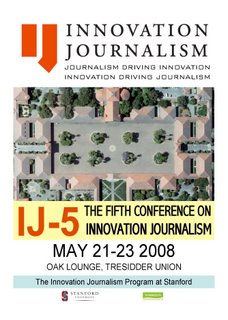
Here is the final website of IJ-5, the Fifth Conference on Innovation Journalism, which took place at Stanford on May 21-23 this year.

All conference documents are available through one portal (here):
  • the program
  • the presentations including summaries, articles and slide presentations
  • speaker bios
  • list of conference participants
The conference website was made entirely with Google Docs and Blogger, which turned out to be very efficient for working interactively in a group in building the conference.

Thursday, April 24, 2008

Injo Discussed in EU parliament

The innovation journalism program is presently working on broadening public understanding of how independent journalism covering innovation can be as important for democracy as traditional political journalism, while at the same time offering a promising new market for the news industry. It is a boot-strapping operation that requires contacts with all types of stakeholders in the innovation economy.

Knowledge4Innovation, headed by Roland Strauss, organized an event in the EU parliament on April 8, bringing together stakeholders in the EU innovation economy including parliamentarians and top level decision makers from the EU commission, such as Angelika Niebler, EU parliament chairwoman of the Committee on Industry, Research and Energy; Janez Potocnik, EU Commissioner for Science and Research, and Odile Quintin, Director General, DG Education and Culture.

I was selected by K4I to read the declaration of the event, and to speak about how independent innovation journalism is the key for bringing together the innovation economy with democratic society, a point that was well understood by many of the politicians in the audience. Potocnik has previously spoken about this.

The program of the event is here, and the list of participants is here. A substantial part of the Brussels innovation policy power players were present. The organisers had not counted with the enormous interest, and were forced to turn down people, as the event could not host more than 150 participants. This is an indication of how 'innovation' is rapidly claiming an increasing mindspace in Brussels.

The K4I news release for the event is here.


Wednesday, April 16, 2008

Yearly Finnish InJo Award to Tarja Halla


Finjo - the Finnish Society for Innovation Journalism - hands out a yearly award for best Innovation Journalism story.

The second Finnish Award of Innovation Journalism was given to Tarja Halla, a reporter for the daily newspaper Maaseudun Tulevaisuus. The story Huomisen lihaa kasvatetaan laboratorioissa (Tomorrow´s meat grows in laboratories) is about the future of the meat production.

Well-known Finnish politician and writer Osmo Soininvaara chose the winner this time. Soininvaara has served as Minister of Health on Social Services (2000-2002), and has a licentiate degree in statistics. In his remarks, he said that “the story started right from the core of the whole issue”, and “the language was clear, statistical figures informative, and general view inspiring”.

All together 50 journalistic stories competed for the award, which is called Innovaatiokide 2008 (Innovation Crystal 2008), and is was accompanied by a cheque of euros 3000. The sponsor of the prize was Finnish high-tech company Vaisala.

Award winning ceremony took place during the Media Fair in Helsinki April 11th.

Finjo: http://www.finjo.fi/
Maaseudun Tulevaisuus: http://www.maaseuduntulevaisuus.fi/
Helsinki Media Conference: http://www.mediapaivat.fi/english/
Vaisala: http://www.vaisala.com/

Saturday, April 05, 2008

InnovationBeat Newsroom


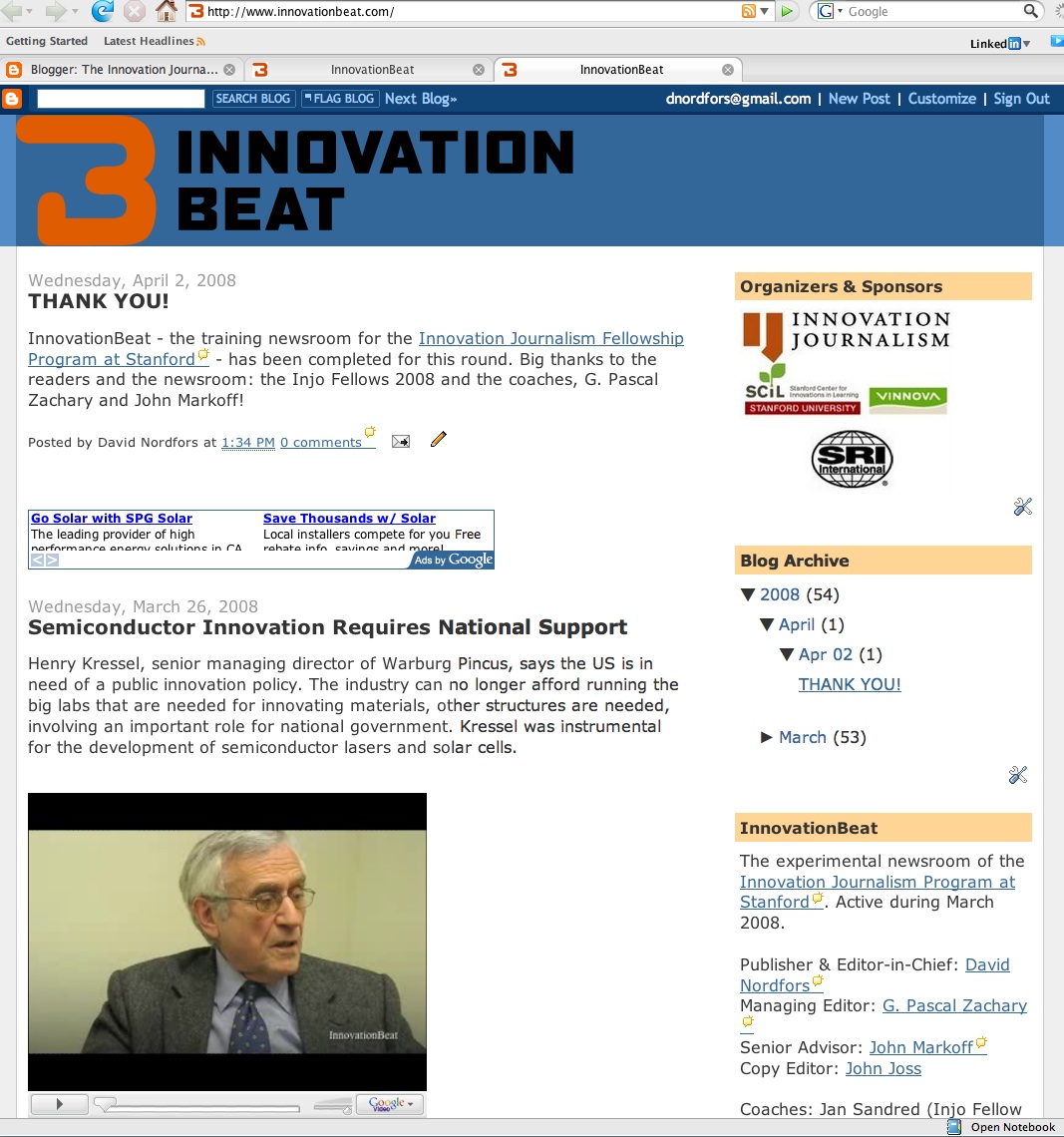
InnovationBeat - the training newsroom for the Innovation Journalism Fellowship Program at Stanford - has been completed for this round. Big thanks to the readers and the newsroom: the Injo Fellows 2008 and the coaches, G. Pascal Zachary and John Markoff!

The fellows published in all 53 stories, and there were a large number of lunch speakers, of which some where portrayed in InnovationBeat, among them Vint Cerf and Doug Engelbart.

I also want to thank Curtis Carlson and SRI International for providing us with a venue. The SRI support has been most important for the program.

Strategic Innovators: InJo as Driver for Economic Growth

The Indian publication "Strategic Innovators" invited me to write an essay on Innovation Journalism as a Driver for Economic Growth.

The published article is available here (Strategic Innovators Vol.1 Issue 3, Feb-Apr 2008; "Innovation Journalism as a Driver for Economic Growth", D.Nordfors p.14-19.)

"Strategic Innovators" is published by The IIPM Think Tank, an independent, India-centric research body, is inspired by Dr. M.K. Chaudhuri's vision of India as an economic powerhouse in the 21st century. The IIPM Think Tank is committed to enhance public awareness of policy issues an economics and management and to engineer solutions that will fulfill the 'Great India Dream'. By publishing the finding of its research, and though the active participation of its senior researchers in the media and policy, it aims to bring new knowledge to the attention of policy makers.